From Toddlers to Teens: How Snack Needs Change with Age Most Indian families have one snack drawer. Everyone eats from it — the two-year-old, the eight-year-old, the fourteen-year-old, and often the adults too. Whatever is convenient,

Some children seem to catch every cold that passes through the classroom. Others sit next to the same sick friends, share the same water bottles, breathe the same air — and stay well. Parents of the
Ask any parent what the hardest part of feeding children well is, and the answer is almost never "I don't know what's healthy." It is: "I run out of ideas." And the second answer is almost
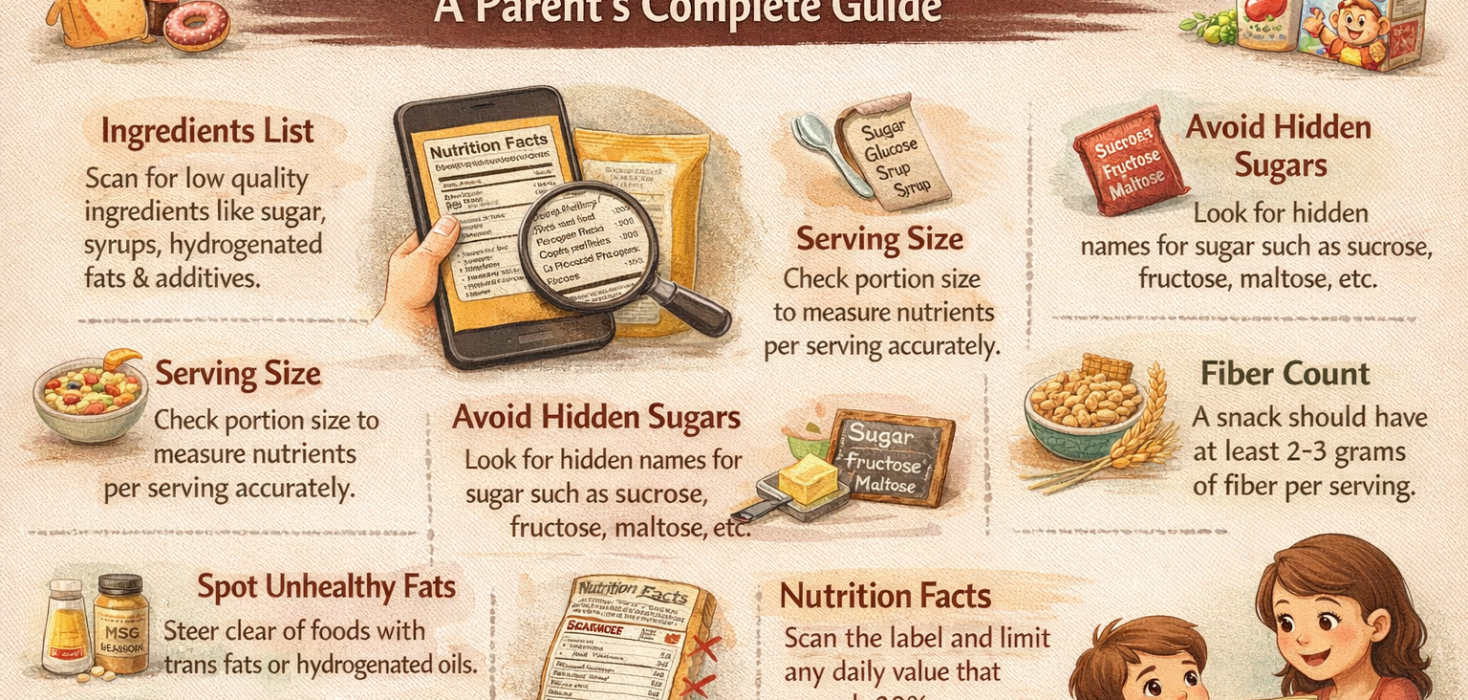
You are standing in a supermarket aisle, packet in hand, squinting at a nutrition label printed in font so small it requires reading glasses you don't have with you. The front of the pack says "whole
You offer your child a bowl of fruit. They want a biscuit. You serve a nutritious lunch. They ask for something sweet after two bites. You try to cut back on packaged snacks. The result is
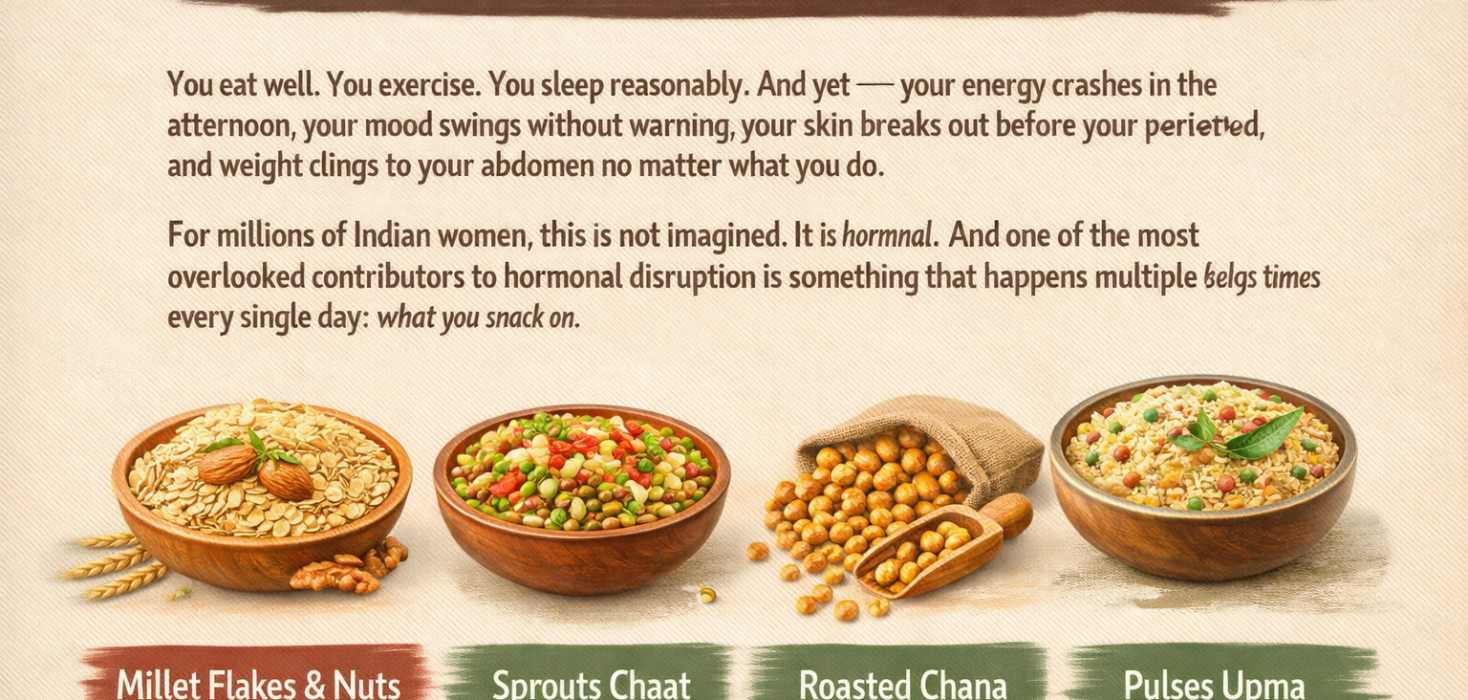
You eat well. You exercise. You sleep reasonably. And yet — your energy crashes in the afternoon, your mood swings without warning, your skin breaks out before your period, and weight clings to your abdomen no
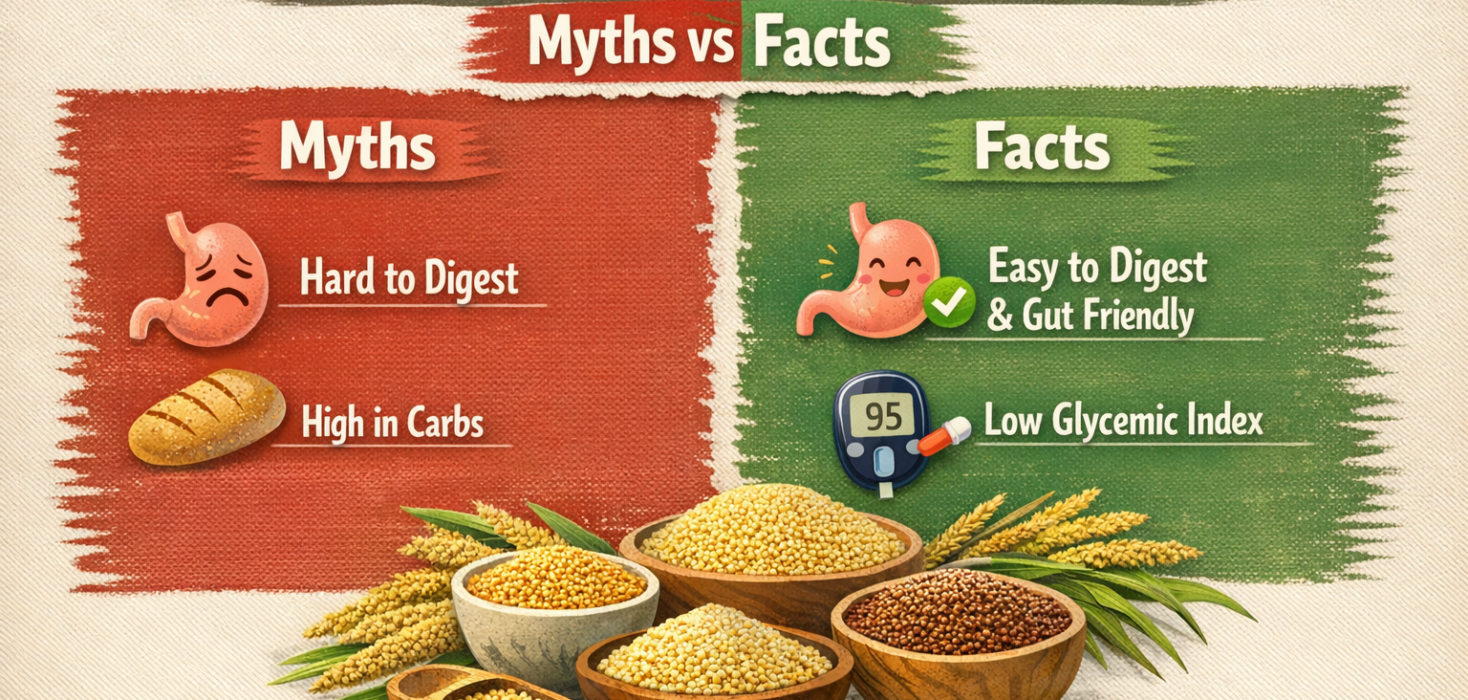
Millets are having a well-deserved comeback in Indian households. From government campaigns to celebrity nutritionists, everyone seems to be talking about jowar, bajra, ragi, and their extraordinary health benefits. But alongside this revival, a wave of
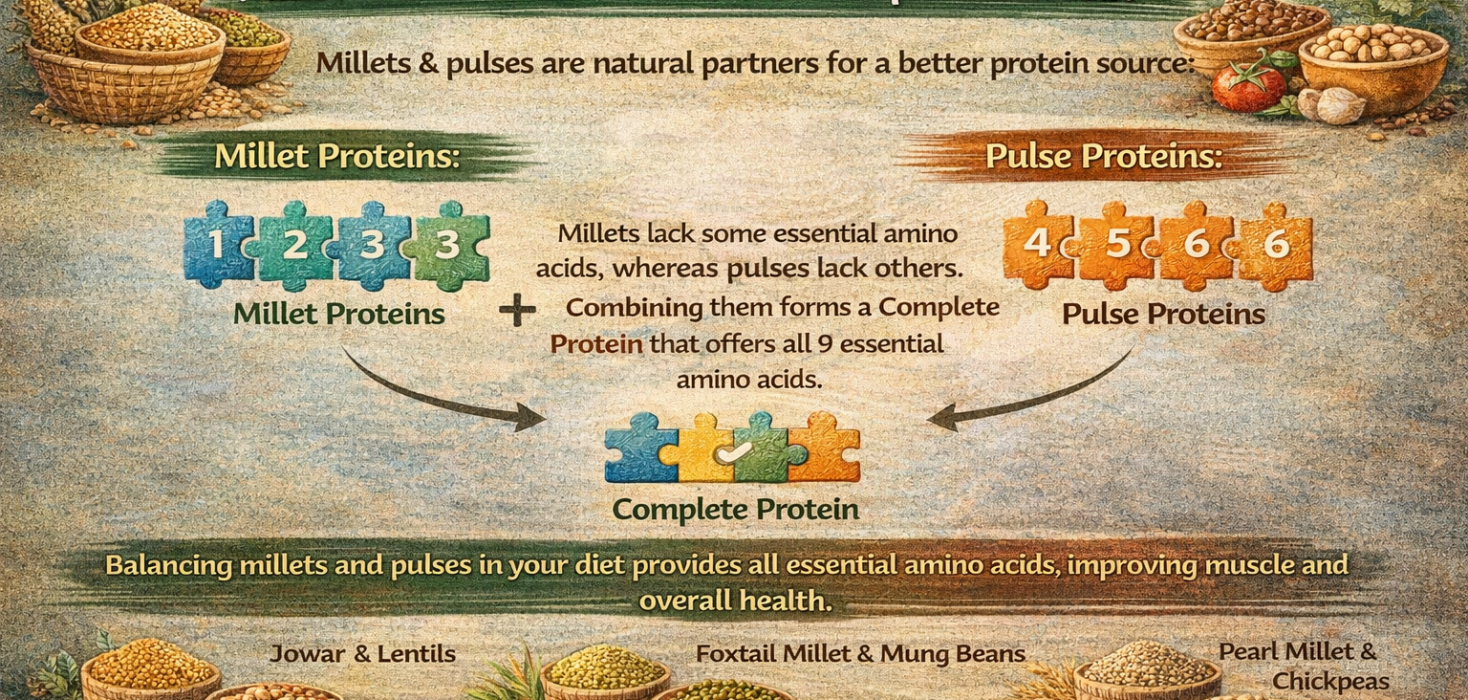
There is a reason your grandmother always served dal with jowar bhakri. Or moong with rice. Or rajma with roti made from bajra. It wasn't just habit. It wasn't just taste. It was, unknowingly, one of
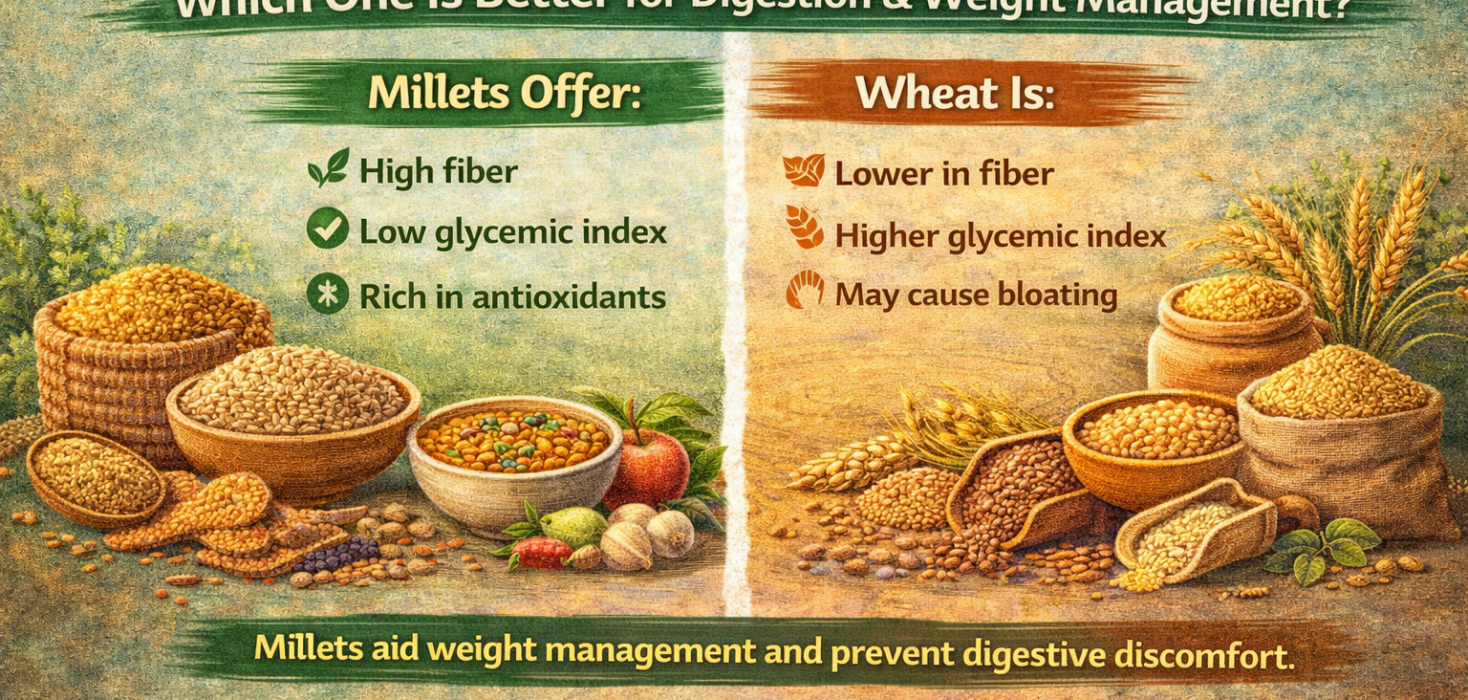
For decades, wheat has been the undisputed king of Indian kitchens. Rotis made of atta, biscuits baked in maida, bread for breakfast — wheat is everywhere. Meanwhile, traditional grains like jowar, bajra, and ragi quietly faded
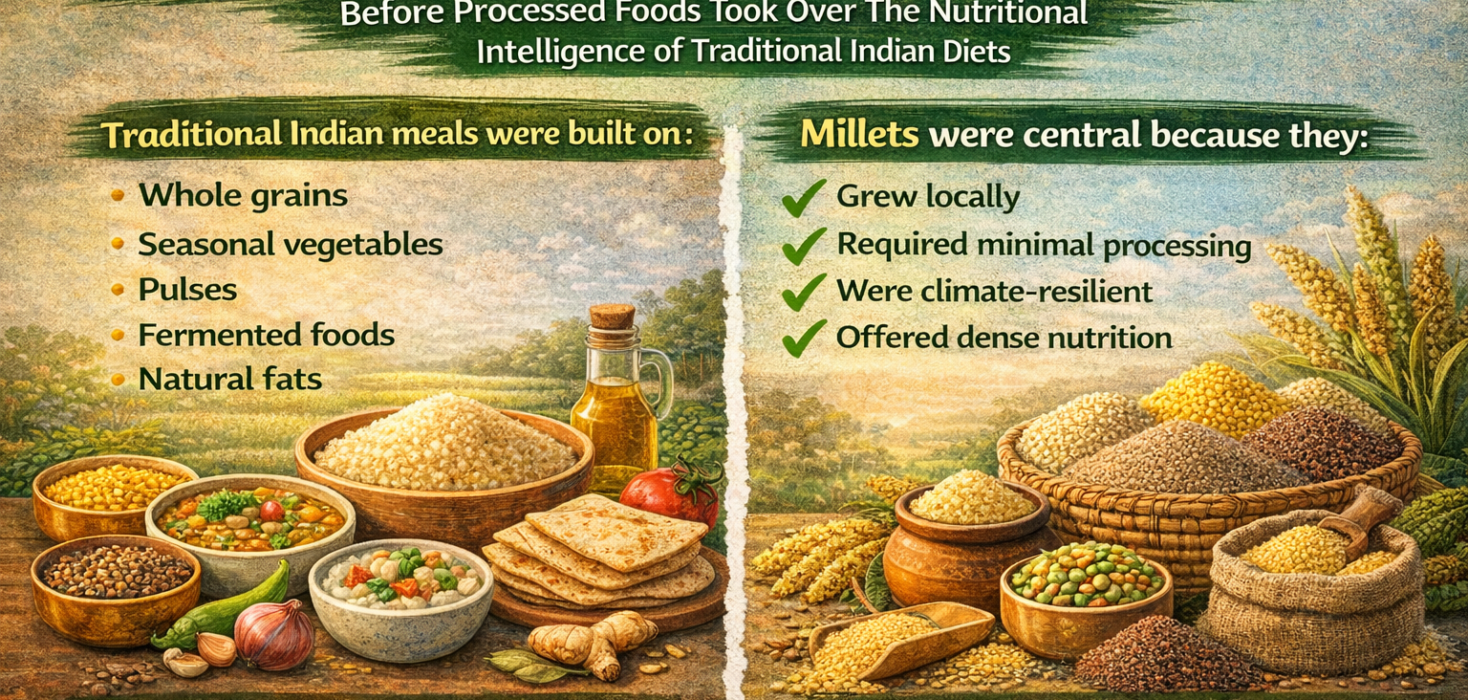
Before supermarkets were filled with refined flour snacks, protein bars, and packaged cereals, Indian households relied on something far simpler — millets and pulses. For centuries, millets like ragi, jowar, bajra, and little millet were staple